

A dental practice can deliver excellent care and still have an empty chair if potential patients cannot find it online, do not understand its services, or hesitate to book their first appointment.
Effective dental digital marketing services help close that gap by connecting your practice with people actively looking for dental care and giving them clear reasons to choose your clinic.
From improving local Google visibility to running targeted advertising campaigns, the goal is to turn online attention into genuine patient inquiries.
The challenge is knowing where to focus. Posting on social media every day will not fix a website that fails to convert visitors, and increasing your advertising budget will not solve a campaign that attracts the wrong audience.
A stronger approach combines search visibility, patient-focused content, a smooth booking experience, and reliable performance tracking.
This guide explores 12 practical dental marketing strategies to help your practice attract new patients, strengthen its online reputation, and build sustainable growth.
1. Strengthen Your Local SEO to Reach Nearby Patients
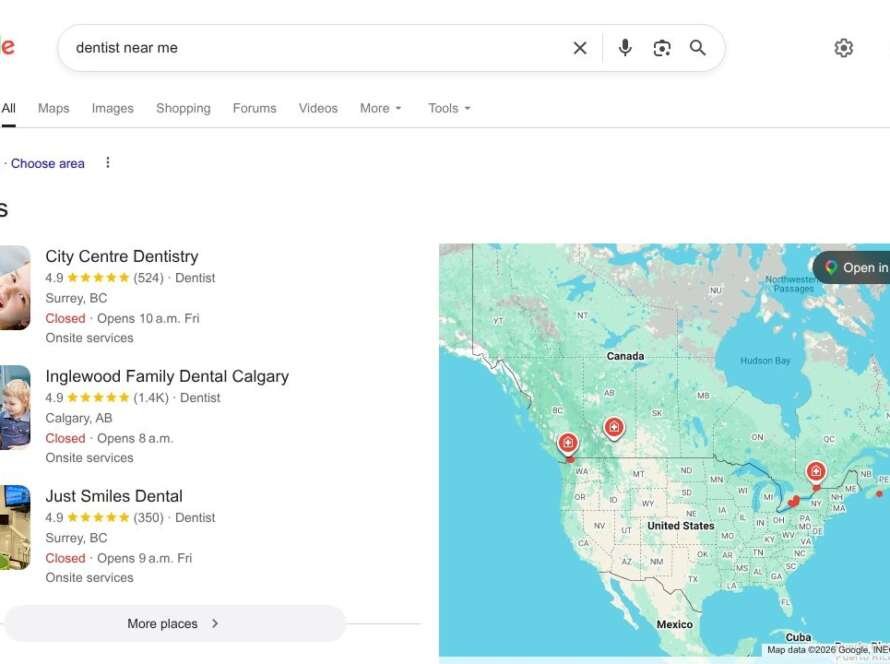
Local SEO helps your dental practice appear when people search for dental services in a specific area. For example, someone searching for a dentist near their home or workplace may compare local listings before visiting a clinic’s website.
Start by optimizing your Google Business Profile and keeping your practice information accurate. Google identifies relevance, distance, and prominence as key factors in local search rankings, although no agency can guarantee a particular position.
Focus on these practical improvements:
- Complete your Google Business Profile with the correct business name, address, phone number, hours, and relevant categories.
- Add accurate information about the treatments your practice provides.
- Upload genuine, high-quality photographs of your clinic, team, and facilities.
- Keep your website and business listings consistent.
- Respond professionally to patient reviews.
- Create useful location-specific website content without repeating the same keywords unnaturally.
Practical tip: If your clinic serves multiple communities, develop genuinely useful location pages only where you can provide relevant information.
Replacing a city name across dozens of otherwise identical pages is not a strong local SEO strategy.
2. Build a Dental Website That Turns Visitors Into Appointments
Your website should make it easy for prospective patients to understand your services, assess your practice, and book an appointment.
A visually attractive website is helpful, but it also needs to be fast, mobile-friendly, accessible, and designed around clear next steps.
Imagine someone searching for an emergency dentist on their phone. If the phone number is difficult to find, the page loads slowly, or the booking process is confusing, that visitor may contact another clinic instead.
Improve your website by including:
- Clear service pages for general, cosmetic, restorative, and emergency dentistry, where applicable.
- Visible appointment-request and telephone options.
- Dentist biographies, qualifications, and relevant experience.
- Straightforward explanations of treatments and common patient concerns.
- Mobile-friendly layouts and readable text.
- Secure forms that collect only the information necessary for an inquiry.
Each important treatment page should answer the questions a prospective patient is likely to have. Google also recommends creating helpful, accessible content and making websites easier for search engines to understand.
3. Use Google Ads to Reach Patients With High-Intent Searches
Google Ads can help your practice appear prominently when people search for specific dental services. Unlike SEO, which generally builds organic visibility over time, paid search can bring targeted traffic while campaigns are running.
For example, a clinic might create separate campaigns for emergency dentistry, dental implants, and cosmetic treatments. This allows the messaging, landing pages, budgets, and conversion tracking to reflect the different goals of each campaign.
A practical Google Ads strategy includes:
- Research relevant keywords: Identify the services and locations your prospective patients search for.
- Organize campaigns by treatment: Keep ad groups focused on closely related services.
- Write clear ad copy: Explain the service and provide a relevant next step without making unsupported claims.
- Create dedicated landing pages: Send visitors to pages that match their search rather than directing every click to the homepage.
- Track conversions: Measure calls, form submissions, and appointment requests where tracking is available.
- Review performance regularly: Adjust keywords, bids, landing pages, and budgets based on meaningful results.
Dental advertisers should also review the applicable Google Ads healthcare and personalized advertising policies before launching campaigns. Some healthcare-related targeting practices are restricted, and eligibility depends on the content and campaign setup.
The key principle: Do not measure a dental advertising campaign by clicks alone. Evaluate whether it attracts relevant inquiries at a cost that makes sense for your practice.
4. Turn Patient Reviews Into a Reputation-Building Asset
Online reviews influence how prospective patients evaluate a dental clinic before making contact. Thoughtful feedback can help people understand the experience your practice aims to provide, while professional responses show that patient concerns are taken seriously.
Create a consistent process for requesting honest reviews after appointments. You can use a follow-up email, text message, or printed reminder that makes leaving feedback straightforward.
To manage reviews effectively:
- Ask patients for honest feedback without pressuring them to leave positive ratings.
- Respond courteously to positive and negative reviews.
- Avoid discussing treatment details or confirming sensitive patient information publicly.
- Address recurring concerns internally and improve processes where appropriate.
- Never purchase fake reviews or offer incentives in exchange for positive ratings.
A review strategy should focus on earning genuine feedback rather than manufacturing a perfect rating. Google also recommends responding to reviews as part of managing a Business Profile.
5. Create Helpful Dental Content That Answers Patient Questions
Content marketing gives your practice opportunities to reach people before they are ready to book an appointment.
Educational articles, treatment guides, short videos, and service FAQs can help prospective patients understand their options and recognize when professional advice may be appropriate.
Instead of publishing generic posts about brushing your teeth, address specific questions your patients frequently ask. Examples include:
- How much do dental implants cost, and what affects the price?
- What should I expect during a root canal appointment?
- When should a child first visit a dentist?
- What are the differences between professional teeth whitening and at-home options?
- What should I do if I experience a dental emergency?
Build each piece of content around a clear question and provide a direct, accurate answer.
Have clinical information reviewed by an appropriately qualified dental professional, particularly when discussing risks, treatment suitability, costs, or expected outcomes.
Useful content can support SEO, help patients make informed decisions, and give your team resources to share when common questions arise.
6. Use Social Media to Make Your Practice More Familiar
Social media helps prospective patients become familiar with your clinic, team, services, and approach to patient care. It is particularly useful for sharing visual content and maintaining communication with your local community.
Your social media strategy does not need to depend on posting several times every day. Consistent, useful content is more valuable than a high volume of repetitive posts.
Consider a balanced content mix:
- Educational posts: Explain dental hygiene habits and common treatment questions.
- Team introductions: Introduce dentists and staff with their permission.
- Clinic tours: Show the environment and facilities using genuine photographs or videos.
- Treatment explainers: Describe what patients can generally expect during a procedure.
- Community content: Share relevant local events and practice updates.
- Appointment reminders: Direct interested users to your website or booking channel.
Facebook and Instagram can support awareness and engagement, while paid campaigns can extend the reach of selected content.
Make sure all content is accurate, respectful, and consistent with applicable professional advertising and privacy requirements.
7. Develop Email and SMS Follow-Up Campaigns
Email and SMS marketing can help your practice maintain communication with patients who have agreed to receive relevant messages.
These channels are useful for appointment reminders, recall communications, practice updates, and appropriate follow-ups.
A simple communication plan might include:
| Message type | Purpose | Important consideration |
| Appointment reminder | Reduce missed appointments | Confirm the appointment details clearly |
| Routine recall reminder | Encourage patients to arrange appropriate follow-up care | Use clinically appropriate intervals |
| Practice newsletter | Share useful oral health information | Keep content relevant and concise |
| New service announcement | Explain a newly available service | Avoid exaggerated treatment claims |
| Feedback request | Invite patients to share their experience | Request honest feedback without pressure |
In Canada, commercial electronic messages may be subject to Canada’s Anti-Spam Legislation (CASL).
Practices should review consent, sender identification, unsubscribe requirements, and other applicable obligations before sending marketing emails or texts.
Automation can reduce repetitive administrative work, but it should not replace professional judgment. Keep patient information secure and avoid including unnecessary sensitive details in messages.
8. Create Dedicated Landing Pages for High-Value Treatments
A dedicated landing page gives each major dental service the attention it deserves.
Someone searching for dental implants has different questions from someone looking for a routine check-up, so sending both visitors to the same generic page can weaken the experience.
Create focused landing pages for services that align with your practice’s expertise and growth goals, such as:
- Dental implants
- Invisalign and clear aligners
- Professional teeth whitening
- Cosmetic dentistry
- Emergency dental care
- Children’s dentistry
Each page should explain the service, outline what patients can generally expect, answer common questions, and provide a clear way to contact the clinic.
Avoid publishing multiple pages that differ only by a location name. Every landing page should offer useful, relevant information and a distinct purpose.
Conversion tip: Track calls, appointment requests, and other meaningful actions separately for each landing page. This helps you identify which services attract interest and which pages need improvement.
9. Use Video Marketing to Explain Treatments and Introduce Your Team
Dental treatment can feel unfamiliar or intimidating, particularly for patients who are nervous about visiting a dentist. Short, informative videos can make your practice more approachable by showing the people behind the services and explaining what patients can expect.
You do not need a professional production studio to get started. Clear audio, good lighting, accurate information, and a confident presenter can make a useful video.
Try these video formats:
- A dentist answering a frequently asked question.
- A short introduction to your clinic and team.
- An explanation of what happens during a first appointment.
- A general overview of a dental treatment.
- A tour showing the clinic environment.
- Oral health tips presented by a qualified dental professional.
Publish suitable videos on your website, YouTube, Instagram, or Facebook, depending on your audience and objectives.
Add captions where appropriate and make sure the information remains accurate when viewed without sound.
Patient testimonials or treatment footage require particular care. Obtain appropriate consent, protect patient privacy, and avoid implying that an individual result is guaranteed for everyone.
10. Strengthen Your Google Business Profile With Regular Updates
Your Google Business Profile is more than an online listing. It gives prospective patients access to essential information about your clinic and helps Google understand how your practice relates to local searches.
An incomplete or outdated profile can create unnecessary friction for someone trying to confirm your opening hours, find your location, or contact your team.
Maintain your profile by:
- Checking contact details and opening hours regularly.
- Updating special holiday hours.
- Selecting the most relevant business categories.
- Adding genuine photographs of the practice.
- Reviewing and responding to feedback.
- Keeping available service information accurate.
- Monitoring profile performance and website visits where reporting is available.
Google states that complete, accurate business information can improve a business’s eligibility to appear in relevant local results. However, local rankings also depend on factors such as distance and prominence.
Consistency matters more than posting for the sake of activity. Prioritize information that helps patients make practical decisions about visiting your clinic.
11. Build Local Partnerships and Community Visibility
Digital marketing becomes more effective when your practice has a recognizable presence in the community it serves.
Local partnerships can help introduce your clinic to relevant audiences and create opportunities for genuine relationships beyond search engines and paid advertisements.
Consider activities that fit your practice and community:
- Participating in local health and wellness events.
- Supporting school oral health education initiatives.
- Collaborating with appropriate community organizations.
- Sponsoring relevant local events.
- Sharing educational resources with community groups.
- Contributing expert commentary to legitimate local publications.
These activities should provide real value rather than exist solely to generate backlinks. If a partnership results in a relevant website mention or link, it may also support your online visibility.
Measure outcomes where possible, such as referral inquiries, event engagement, website visits, or new patient sources.
Local marketing is easier to evaluate when the team records how people hear about the practice.
12. Use Marketing Automation and Analytics to Improve Results
Marketing automation helps dental practices manage repetitive communication and organize incoming inquiries.
Analytics shows which marketing activities are working, allowing the practice to make decisions based on evidence rather than assumptions.
For example, if your clinic receives plenty of website traffic but few appointment requests, the problem may involve the landing page, service information, booking process, or the relevance of the visitors.
Increasing the advertising budget before investigating these issues could simply increase costs.
A practical measurement framework includes:
| Metric | What it helps you understand |
| Organic search visibility | Whether your website is becoming more discoverable in relevant searches |
| Website conversion rate | How often visitors complete a desired action |
| Cost per inquiry | How much advertising spend is associated with each tracked inquiry |
| Qualified inquiry rate | Whether incoming inquiries match the services your practice provides |
| Appointment conversion rate | How effectively inquiries become booked appointments |
| Cost per new patient | The marketing cost associated with acquiring a new patient, when attribution is reliable |
| Patient retention | Whether patients return for appropriate ongoing care |
Useful automation workflows may include appointment confirmations, consent-based follow-up messages, recall reminders, and routing inquiries to the appropriate team member.
Protect patient information, use appropriate access controls, and ensure your technology and communication processes meet applicable privacy requirements.
Review the data regularly so automation improves the patient experience instead of creating unnecessary messages or administrative complexity.
Which Dental Marketing Strategies Should You Prioritize First?
You do not need to implement all 12 strategies at once. The right starting point depends on your practice’s current visibility, available budget, staffing, and immediate goals.
- Prioritize local SEO, Google Business Profile optimization, technical SEO, and relevant treatment pages.
- Consider carefully targeted Google Ads, dedicated landing pages, and reliable conversion tracking.
- Improve your website experience, strengthen genuine patient reviews, and publish content that answers common concerns.
- Review lead quality, campaign attribution, landing-page performance, and the process for converting inquiries into appointments.
The best dental marketing strategy is not necessarily the one with the most channels. It is the one that addresses your biggest growth barrier and improves through consistent measurement.
How Can You Measure the Success of Dental Digital Marketing Services?
Successful dental digital marketing services should produce measurable progress toward the practice’s objectives. Website traffic, social media engagement, and search rankings can provide useful context, but they should not be the only indicators of success.
Use a straightforward process:
- Establish a baseline. Record current website traffic, search visibility, inquiries, advertising costs, and appointment conversions where available.
- Set realistic targets. Choose goals that reflect your location, budget, capacity, and service priorities.
- Track lead sources. Use appropriate analytics, call tracking, and inquiry records to understand how patients discover the clinic.
- Assess lead quality. Separate relevant prospective patient inquiries from spam, duplicate submissions, and unrelated requests.
- Review performance monthly. Look for trends, identify underperforming activities, and agree on specific next steps.
- Adjust the strategy. Reallocate resources based on evidence, while allowing sufficient time to evaluate longer-term activities such as SEO.
Attribution is not always straightforward. A patient may discover a clinic through Google, revisit the website through social media, and then call after receiving a recommendation from a friend.
Reporting should acknowledge these limitations instead of claiming that every appointment can be attributed perfectly to a single channel.
Frequently Asked Questions About Dental Marketing
What are the most effective dental marketing strategies?
Local SEO, Google Ads, an optimized website, patient reviews, educational content, and conversion tracking are useful starting points for many practices. The best combination depends on local competition, treatment priorities, budget, and the clinic’s ability to handle new inquiries.
How can a dental practice attract more new patients?
Make your practice easy to discover, explain your services clearly, build confidence through accurate information and genuine reviews, and simplify the appointment process. Track inquiries and bookings to identify which activities contribute to new patient acquisition.
How much should a dental practice spend on marketing?
There is no universal marketing budget that suits every dental practice. Costs depend on the market, growth targets, competition, service mix, and the channels being used. Build a budget around realistic objectives and review results before increasing investment.
Are dental digital marketing services worth the investment?
They can be valuable when the strategy addresses a clear business need, and performance is measured properly. SEO, paid advertising, website improvements, and automation can support visibility and patient acquisition, but results depend on implementation and market conditions.
How long does dental SEO take to work?
The timeline varies according to competition, website condition, location, and the work required. Some technical or content improvements may show earlier progress, while stronger organic visibility can take several months or longer. No provider can guarantee a specific ranking or timeline.
Can social media marketing help a dental clinic attract patients?
Yes. Social media can help a practice build familiarity, share educational information, introduce its team, and promote relevant services. Its impact should be evaluated through meaningful engagement, website activity, inquiries, and other appropriate outcomes rather than follower counts alone.
Should dentists hire a dental marketing agency or manage marketing in-house?
An in-house team may suit practices with the necessary expertise, tools, and time. An agency can provide access to specialized skills across SEO, advertising, content, analytics, and automation. Compare costs, responsibilities, reporting, and the level of support your practice actually needs.
Grow Your Dental Practice With a More Focused Marketing Strategy
Attracting more patients is not about being visible everywhere.
It is about appearing in the right searches, communicating the value of your services, making booking straightforward, and understanding which marketing activities contribute to your practice’s goals.
PSM Digital Agency CA brings 15 years of digital marketing experience to businesses from its Toronto base.
As a Google Premier Partner, the agency offers a data-led approach across SEO, Google Ads, Meta Ads, and marketing automation, with strategies shaped around business objectives rather than a one-size-fits-all template.
For dental practices, this means evaluating opportunities across search visibility, paid campaigns, website performance, and patient inquiry tracking.
Transparent reporting helps keep the strategy accountable and supports informed decisions as your practice grows.
Ready to make your dental practice easier to find and choose?
Explore PSM Digital Agency CA’s dental digital marketing services to discuss your current challenges and identify practical opportunities for attracting more patients.